





 English
 USA
 西班牙语
 俄罗斯
 葡萄牙
 印尼
 巴基斯坦
 尼日利亚
 孟加拉
 墨西哥
 越南
 日本
 韩国
 沙特阿拉伯

For wet wipes manufacturers, producing the right product is only part of a successful business strategy. Producing it at the right time is equally important.
Cooling wipes are more attractive during hot weather, moisturizing wipes may receive more attention in colder months, and outdoor cleaning wipes often have stronger seasonal opportunities. However, if manufacturers wait until consumers start looking for these products before arranging production, they may miss the peak selling season.
The key is to plan production in advance.
This guide explains when wet wipes manufacturers should develop, manufacture, and launch different functional wipes throughout the year, helping factories and private-label brands avoid delays and capture seasonal market opportunities.
1. Why Should Wet Wipes Production Be Planned in Advance?
Seasonal wet wipes products usually require several steps before they reach the market:
· Product concept and market research
· Liquid formulation development
· Laboratory sampling and customer approval
· Stability and compatibility testing
· Packaging design and material preparation
· Bulk production and quality inspection
· Shipping and distribution
For a new customized wet wipes product, the entire process can take several months. One industry manufacturing guide estimates approximately 10–16 weeks from product specification to shipment, although actual timelines depend on formulation, packaging, testing, production capacity, and destination.
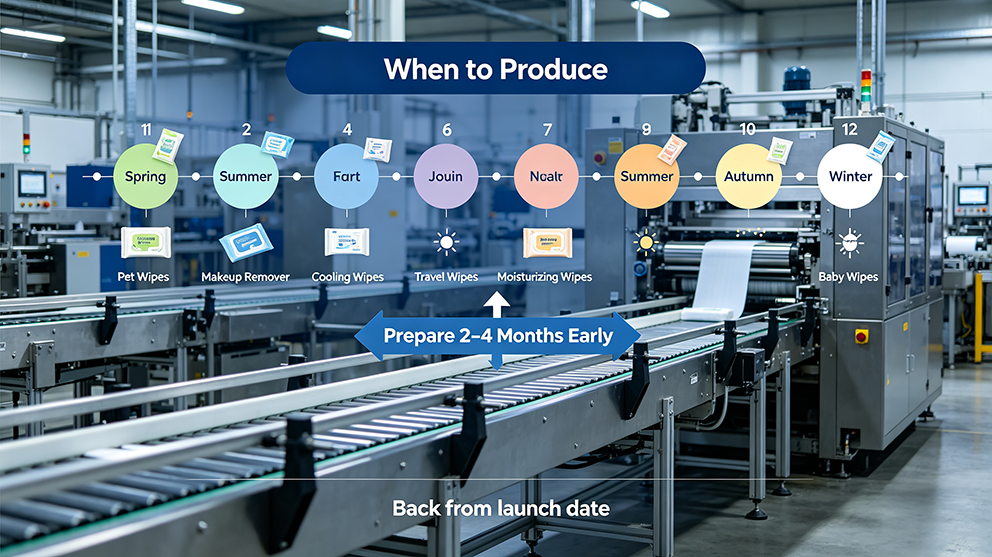
This means manufacturers should work backward from the planned market launch date instead of arranging production at the last minute.
2. When Should Different Functional Wet Wipes Be Produced?
The following schedule provides a practical planning reference for manufacturers targeting markets in the Northern Hemisphere. Production dates should be adjusted for local climates, customer requirements, and shipping routes.
Spring Products: Prepare from November to February
Spring products generally enter the market between March and May.
Recommended products include:
Pet Cleaning Wipes
Develop wipes for cleaning pets' paws, fur, and external body areas. Gentle cleansing and appropriate ingredient selection are important.
Makeup Remover Wipes
Prepare formulations designed for convenient makeup removal, with suitable cleansing ingredients and a comfortable skin feel.
Household Cleaning Wipes
Spring cleaning creates opportunities for kitchen, glass, furniture, and multi-purpose cleaning wipes.
Recommended schedule:
· November–December: Market research and product concept
· December–January: Liquid formulation development and sample approval
· January–February: Packaging preparation and bulk production
· February–March: Shipment and distribution
· March–May: Main selling period
Summer Products: Prepare from February to April
Summer creates opportunities for refreshing, cleansing, and outdoor-use wet wipes.
Recommended products include:
Cooling Wipes
Designed to provide a refreshing sensation in hot weather. Formulations may include suitable cooling ingredients with appropriate safety and compatibility evaluations.
Sweat-Removing Body Wipes
Developed for cleansing sweat and surface impurities after exercise, commuting, and outdoor activities.
Travel and Outdoor Wipes
Portable wipes for camping, picnics, travel, and outdoor use.
Antibacterial and Disinfecting Wipes
Products for hand hygiene or surface disinfection can be developed according to their intended applications, active ingredients, efficacy requirements, and market regulations.
Recommended schedule:
· December–January: Product planning and formulation selection
· January–February: Laboratory samples and performance evaluation
· February–March: Packaging preparation and production planning
· March–April: Bulk production and shipment
· May–August: Main selling period
Autumn Products: Prepare from May to July
Autumn is an opportunity to introduce products focused on personal care, beauty, and everyday maintenance.
Recommended products include:
Moisturizing Facial Wipes
Formulated with suitable humectants and skin-conditioning ingredients for convenient facial cleansing.
Sensitive Skin Wipes
Gentle, fragrance-free formulations can appeal to consumers looking for everyday personal care products.
Leather Cleaning Wipes
Designed for cleaning suitable leather surfaces, with attention to material compatibility and finish protection.
Beauty and Makeup Remover Wipes
Products for daily makeup removal and facial cleansing can be included in autumn beauty campaigns.
Recommended schedule:
· April–May: Market research and product selection
· May–June: Formulation development and sample approval
· June–July: Packaging preparation and bulk production
· July–August: Shipment and distribution
· September–November: Main selling period
Winter Products: Prepare from July to September
Winter product planning should focus on skin comfort, clothing care, and household cleaning.
Recommended products include:
Moisturizing Baby Wipes
Baby wipes are a year-round product, but winter campaigns can emphasize gentle cleansing and suitable moisturizing ingredients.
Hand and Body Cleansing Wipes
Convenient cleansing products for travel, commuting, and outdoor activities during colder weather.
Down Jacket Cleaning Wipes
Specialized wipes for removing localized dirt and stains from suitable winter clothing materials.
Household Cleaning Wipes
Kitchen, bathroom, and multi-purpose cleaning wipes for home maintenance and year-end cleaning.
Recommended schedule:
· June–July: Product planning and formulation development
· July–August: Sample testing and packaging approval
· August–September: Bulk production
· September–October: Shipment and distribution
· November–February: Main selling period
3. Annual Production Calendar for Functional Wet Wipes
The following table summarizes the recommended planning schedule.
| Target Selling Season | Product Examples | Recommended Production Period |
| Spring | Pet wipes, makeup remover wipes, household cleaning wipes | January–February |
| Summer | Cooling wipes, sweat wipes, travel wipes | March–April |
| Autumn | Moisturizing facial wipes, sensitive skin wipes, leather wipes | June–July |
| Winter | Baby wipes promotions, down jacket cleaning wipes, household wipes | August–September |
These are indicative production windows, not fixed deadlines. For new products requiring customized formulations, regulatory review, or special packaging, development should begin earlier.
4. How Much Time Should Manufacturers Allow for Each Production Stage?
One common planning mistake is counting only the time required for bulk production.
In reality, product development and material preparation can take longer than expected.
A practical planning framework is:
| Stage | Indicative Planning Time |
| Product concept and requirements | 1–2 weeks |
| Liquid formulation and laboratory samples | 2–4 weeks |
| Sample evaluation and approval | 2–3 weeks |
| Packaging design and material preparation | 2–6 weeks or more |
| Bulk production and quality inspection | 3–4 weeks |
| Shipping and distribution | Depends on destination and transport method |
These stages may overlap, and actual timelines vary. Special ingredients, testing requirements, packaging printing, and regulatory approvals may extend the schedule.
For example, disinfecting wipes intended for regulated markets may require additional efficacy testing and product authorization. Manufacturers should investigate these requirements at the beginning of development.
5. Why Wet Wipes Liquid Formulation Should Be Developed Early
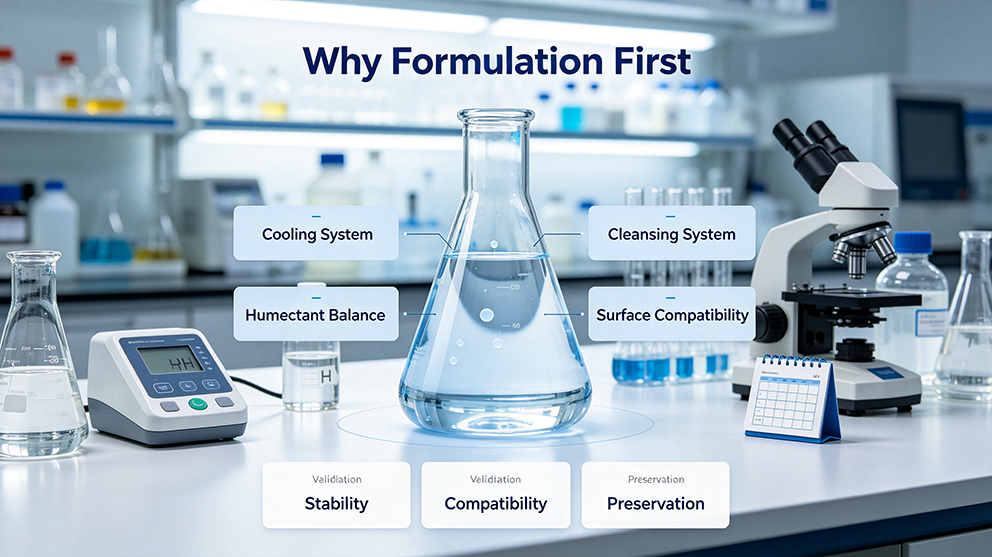
The liquid formulation is one of the most important parts of a functional wet wipes product.
Different product categories require different formulation approaches. Simply changing the fragrance or adding one functional ingredient to an existing formula may not deliver the required performance.
For example:
· Cooling wipes: Require suitable cooling ingredients and evaluation of skin compatibility.
· Makeup remover wipes: Need an appropriate cleansing and solubilizing system.
· Moisturizing wipes: Require a suitable balance of humectants and skin-conditioning ingredients.
· Down jacket cleaning wipes: Need cleaning performance and compatibility with the intended fabrics.
· Household cleaning wipes: Require surfactant systems suitable for the target surfaces and cleaning tasks.
Starting formulation development early gives manufacturers sufficient time to test samples, adjust ingredient combinations, evaluate stability, and confirm compatibility with nonwoven fabrics and packaging.
Working with a specialized wet wipes liquid supplier can also help manufacturers reduce development delays and prepare new products more efficiently.
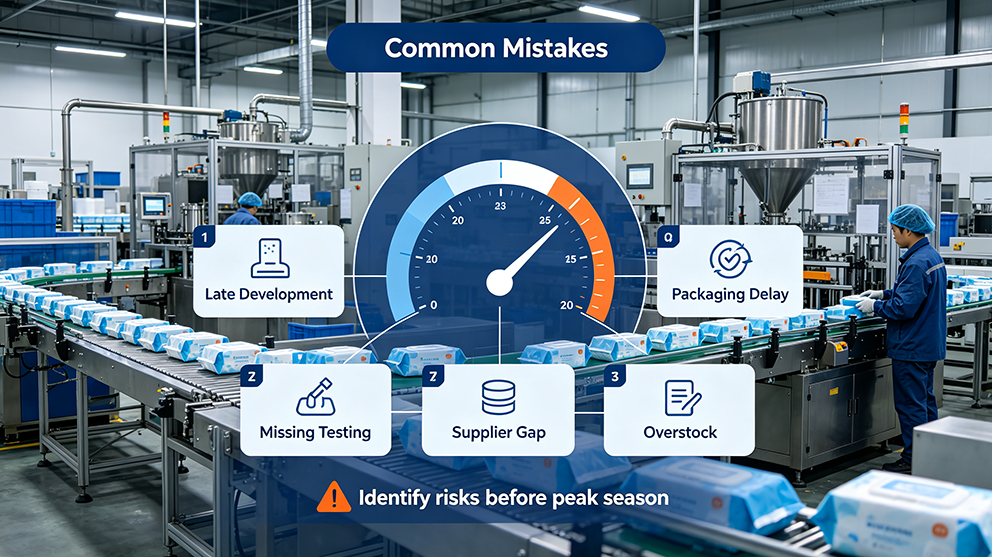
6. Five Common Mistakes That Can Cause Manufacturers to Miss the Selling Season
1. Starting product development too late
Waiting until seasonal demand begins often leaves insufficient time for formulation development, testing, and production.
2. Ignoring packaging lead times
Custom-printed packaging, labels, and special closures may require additional preparation and approval.
3. Overlooking product testing
Skipping appropriate stability, compatibility, or microbiological evaluations can create quality problems after launch.
4. Failing to coordinate with suppliers
Delays in raw materials, nonwoven fabrics, packaging, or functional ingredients can affect the entire production schedule.
5. Producing without a realistic demand forecast
Manufacturers should avoid both last-minute shortages and excessive seasonal inventory. Historical sales, customer orders, and market demand should guide production quantities.
7. How to Build a Year-Round Wet Wipes Production Plan
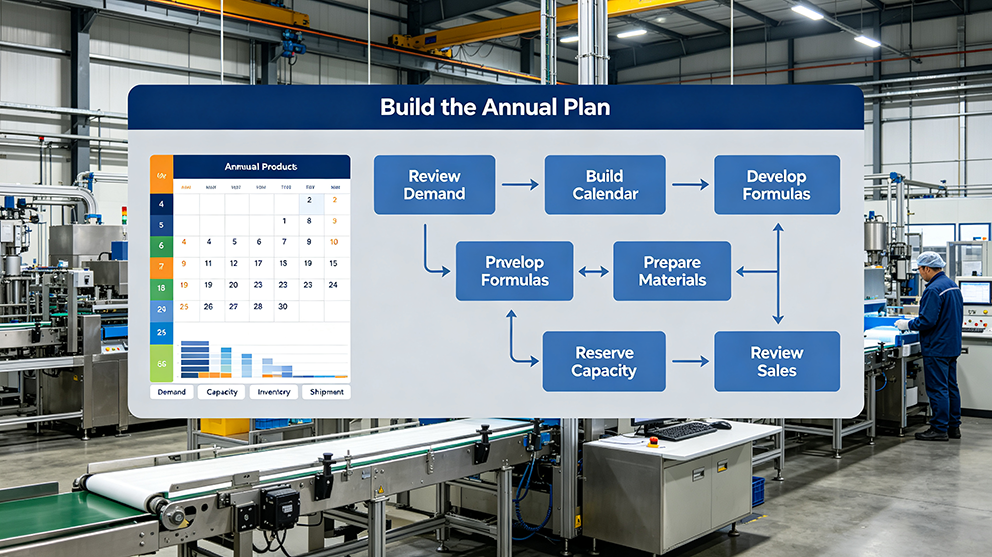
For manufacturers producing multiple functional wipes, an annual planning system can improve production efficiency.
We recommend the following approach:
1. Review market demand: Identify seasonal trends and customer requirements in each target country.
2. Build an annual product calendar: Assign development, production, and shipment windows to each product category.
3. Develop formulations in advance: Confirm ingredients, pH targets, preservation systems, and product performance.
4. Prepare packaging and raw materials: Confirm specifications, suppliers, and delivery schedules.
5. Reserve production capacity: Avoid scheduling all seasonal orders at the last minute.
6. Review sales performance: Use actual sales and customer feedback to improve next year's production plan.
For global manufacturers, seasonal planning should also account for different hemispheres. For example, summer products for Australia and other Southern Hemisphere markets may need to be scheduled around November–February rather than May–August.
Conclusion: Start Production Before the Season Begins
Successful seasonal wet wipes production depends on more than identifying which products consumers need. Manufacturers must also determine when to develop formulations, approve samples, prepare packaging, manufacture in bulk, and ship finished products.
As a general rule, seasonal product development should begin several months before the intended selling season. This gives manufacturers more time to control quality, coordinate suppliers, and avoid missing important market opportunities.
At WipesLiquid, we provide customized wet wipes liquid formulation solutions for global wet wipes manufacturers and private-label brands.
Whether you are planning cooling wipes for summer, moisturizing wipes for winter, makeup remover wipes for spring, or specialized cleaning wipes for seasonal campaigns, our team can help you explore suitable liquid formulation solutions.
Planning your next seasonal wet wipes product? Contact us early to discuss your formulation requirements and production schedule.
