





 English
 USA
 西班牙语
 俄罗斯
 葡萄牙
 印尼
 巴基斯坦
 尼日利亚
 孟加拉
 墨西哥
 越南
 日本
 韩国
 沙特阿拉伯

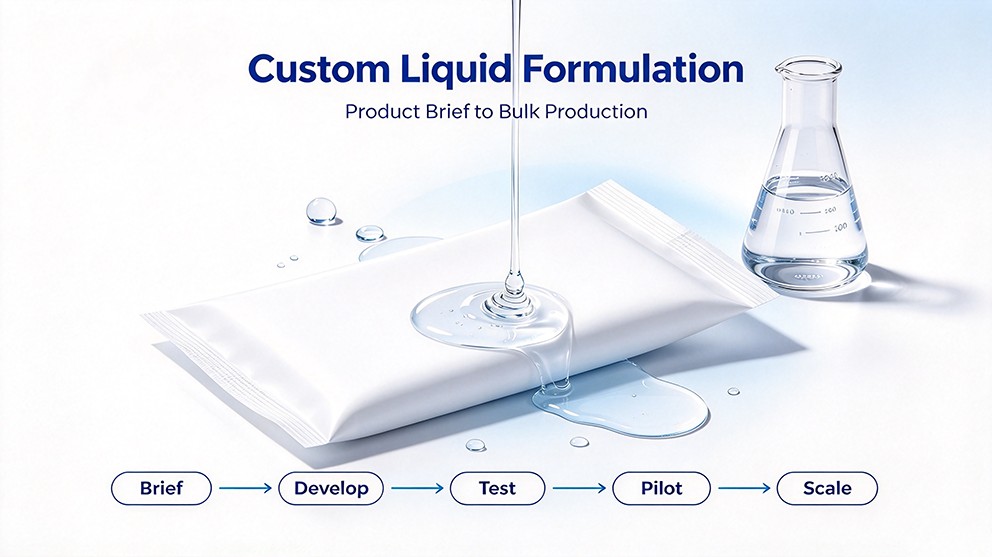
Developing a successful wet wipes product requires more than choosing a suitable nonwoven fabric. The liquid formulation plays a critical role in cleansing performance, skin feel, fragrance, preservation, product stability, and overall consumer experience.
For wet wipes manufacturers and private-label brands, a customized liquid formulation helps create products that meet specific market requirements and brand positioning. But how does a product idea become a reliable formulation ready for bulk production?
This guide explains the key stages of custom wet wipes liquid formulation, from the initial product brief to large-scale manufacturing.
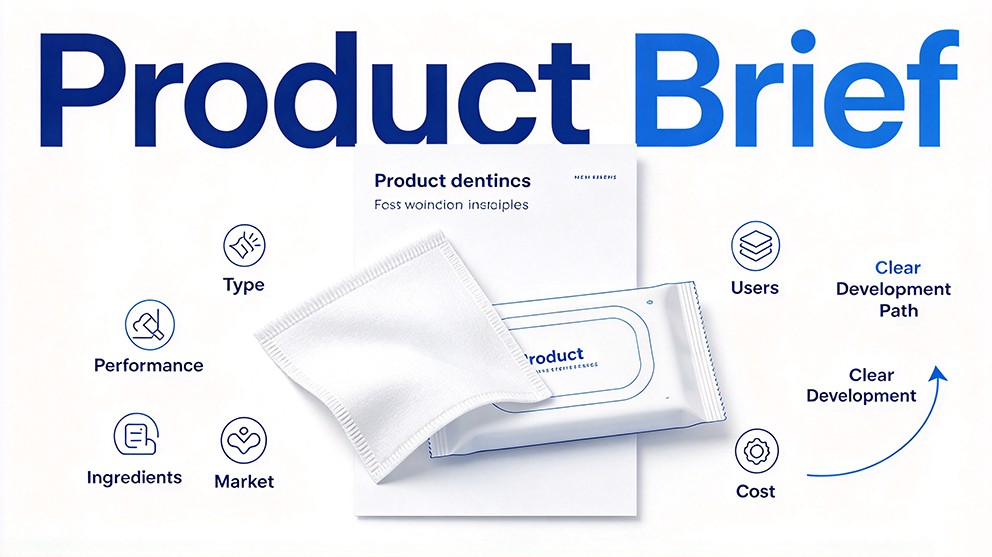
1. Start with a Clear Product Brief
Every successful formulation project begins with a clear understanding of the product requirements.
Before developing a formula, manufacturers and brands should define:
Product type: Baby wipes, personal care wipes, makeup remover wipes, household cleaning wipes, or industrial wipes.
Target users: Babies, adults, sensitive-skin consumers, or professional users.
Performance requirements: Cleansing efficiency, moisturizing feel, low residue, or grease removal.
Ingredient preferences: Fragrance-free, alcohol-free, plant-derived ingredients, or specific functional ingredients.
Target market: The countries or regions where the finished wipes will be sold.
Cost target: The expected liquid cost per kilogram or per finished wipe.
The more detailed the product brief, the easier it is to evaluate technical feasibility, raw material selection, and development costs.
2. Develop a Customized Wet Wipes Liquid Formula
Once the requirements are confirmed, the formulation team can select suitable ingredients and develop initial samples.
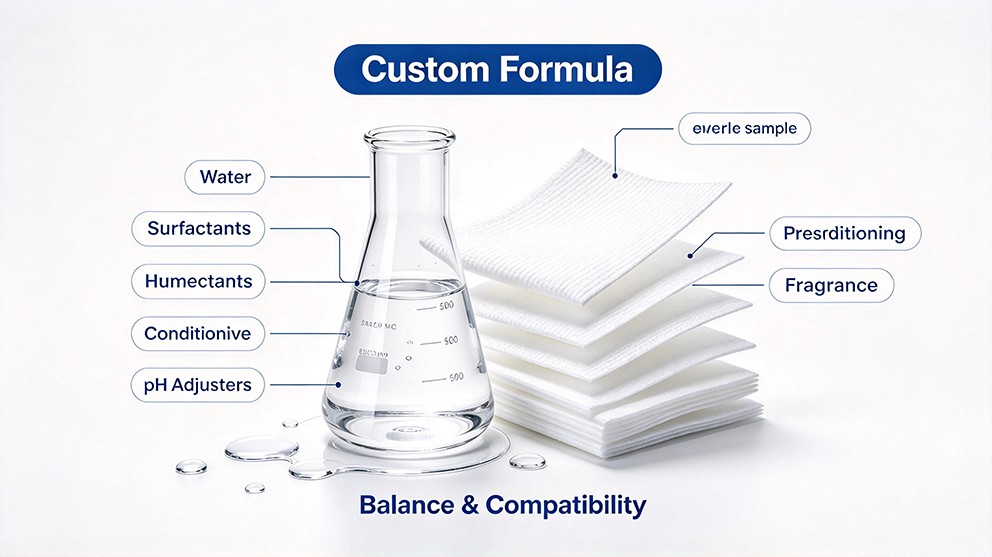
Depending on the product application, a wet wipes liquid formula may contain several functional components:
Water: The primary carrier in many aqueous wet wipes formulations.
Surfactants: Help remove dirt, oil, and other contaminants.
Humectants: Such as glycerin or propylene glycol, selected according to the desired skin feel and formula requirements.
Preservatives: Help control microbial growth in the liquid and finished wipes.
Conditioning ingredients: Such as aloe vera extract or other suitable skin-conditioning agents.
Fragrance: Optional, depending on the product concept and target consumers.
pH adjusters: Used to achieve the target pH range.
Not every formula requires all these ingredients. The final composition depends on the product's intended use, compatibility requirements, cost target, and applicable regulations.
A customized formulation should balance performance, ingredient compatibility, preservation, stability, and manufacturing practicality rather than simply adding more functional ingredients.
3. Test and Refine the Laboratory Sample
After the initial formula is developed, laboratory samples should be evaluated against the product brief.
Typical evaluations may include:
Appearance, color, odor, and pH
Cleansing performance and skin feel, where relevant
Compatibility with the selected nonwoven fabric
Compatibility with packaging materials
Stability under appropriate storage conditions
Microbiological quality and preservation performance
For products intended for skin contact, additional safety assessments may be necessary depending on the ingredients, product claims, and target market.
If a sample does not meet expectations, the formulation can be adjusted and retested. For example, a manufacturer may need to improve cleansing efficiency, reduce residue, modify fragrance intensity, or optimize the formula's cost.
Important: A successful laboratory sample does not automatically mean the formula is ready for commercial production. Testing must reflect the intended product and manufacturing conditions.
4. Conduct Pilot Testing Before Mass Production
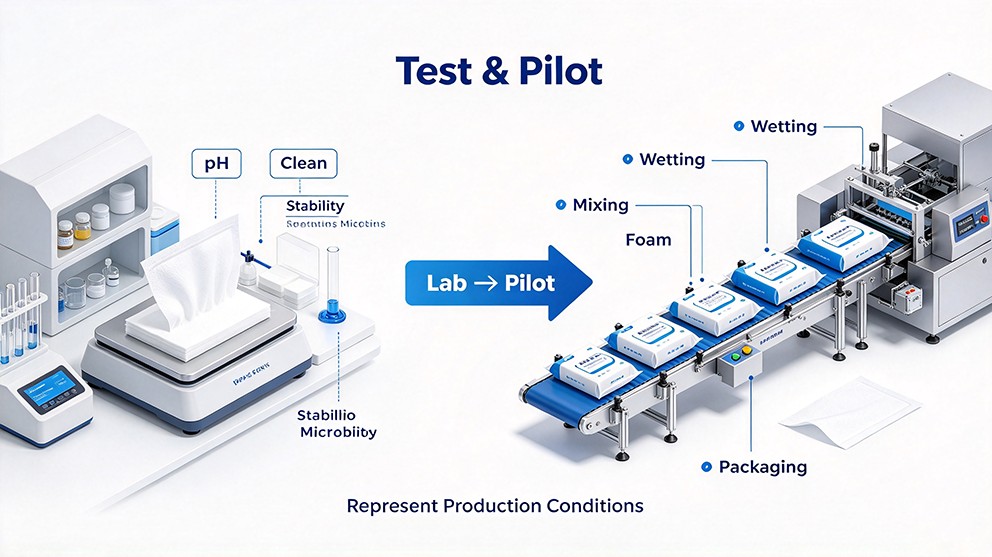
Before moving to bulk production, the formula should be evaluated under conditions representative of the actual production process.
Pilot testing helps identify potential issues that may not appear during laboratory development, including:
Inconsistent liquid distribution across the wipes
Changes in viscosity or appearance during mixing
Excessive foaming during production
Fabric wetting or liquid retention problems
Packaging compatibility issues
Unexpected changes in product quality after processing
The liquid dosage, mixing procedure, production temperature where relevant, and packaging conditions should be reviewed and optimized.
This stage helps reduce production risks and provides a stronger basis for establishing manufacturing specifications.
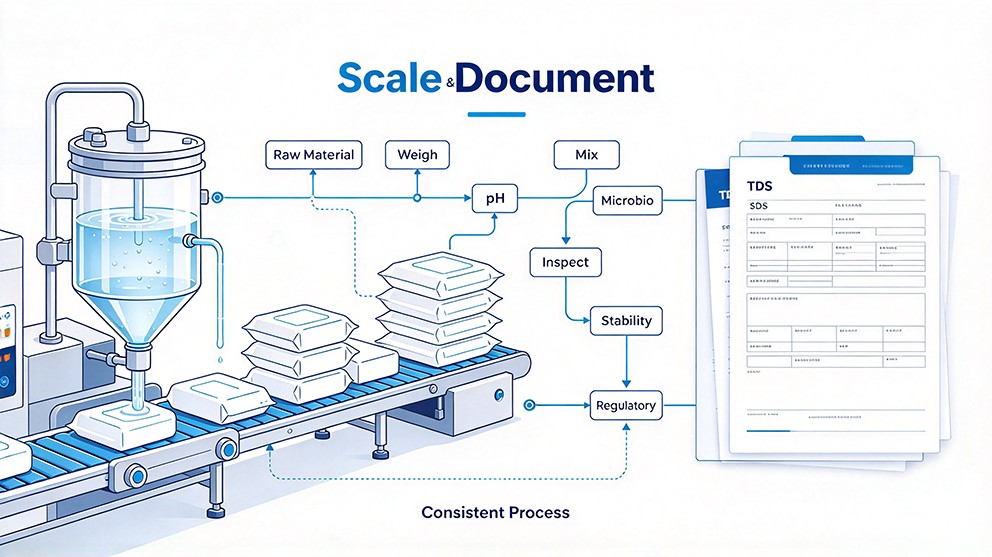
5. Scale Up to Bulk Production
Once the formulation and pilot process meet the agreed requirements, the project can proceed to bulk production.
A reliable scale-up process requires more than multiplying laboratory ingredient quantities. Manufacturers should establish controlled procedures for raw material verification, weighing, mixing, pH adjustment where applicable, quality inspection, and batch documentation.
Key considerations include:
Raw material consistency: Suppliers and incoming materials should meet the required specifications.
Batch-to-batch consistency: Production parameters and finished liquid specifications should be controlled.
Microbial control: Water quality, equipment sanitation, handling procedures, and preservation performance all contribute to microbial risk management.
Finished product verification: Appropriate checks should be performed before the liquid is released for production or shipment.
For wet wipes manufacturers, a well-controlled process helps maintain consistent product quality as production volumes increase.
6. Prepare the Documentation for Commercialization
Documentation requirements vary according to the product type, destination market, and customer requirements. Depending on the project, relevant documents may include:
Product specification or technical data sheet (TDS)
Safety Data Sheet (SDS), where applicable
Ingredient information and relevant CAS numbers
Microbiological test reports
Stability and compatibility test records
Regulatory information required for the target market
The finished wipes product may also require separate assessments, labeling, testing, or regulatory documentation. These requirements should be confirmed early in development rather than postponed until the product is ready to launch.
7. Choose the Right Wet Wipes Liquid Formulation Partner
A capable formulation partner should understand both ingredient technology and the practical needs of wet wipes manufacturing.
When evaluating a supplier, consider its ability to:
Develop formulas for different wet wipes applications
Customize ingredients and performance characteristics
Support sample evaluation and formulation adjustments
Consider preservation and microbial control throughout development
Evaluate compatibility with fabrics and packaging
Support production scale-up and provide relevant technical documentation
Clear communication between the formulation supplier, wipes manufacturer, and brand owner is essential for moving efficiently from concept to commercial production.
Conclusion: From Product Idea to Production-Ready Formula
Custom wet wipes liquid formulation is a structured process involving product requirements, laboratory development, testing, pilot production, and scale-up. Each stage helps ensure that the final formula meets the intended performance, quality, cost, and regulatory requirements.
At WipesLiquid, we provide customized wet wipes liquid formulation solutions for wet wipes manufacturers and brands. Whether you are developing baby wipes, personal care wipes, makeup remover wipes, or household cleaning wipes, our team can work with your product requirements to explore a suitable formulation.
Looking for a custom wet wipes liquid formulation for your next product? Contact us to discuss your product brief, target market, performance requirements, and bulk supply needs.
