





 English
 USA
USA
 西班牙语
西班牙语
 俄罗斯
俄罗斯
 葡萄牙
葡萄牙
 印尼
印尼
 巴基斯坦
巴基斯坦
 尼日利亚
尼日利亚
 孟加拉
孟加拉
 墨西哥
墨西哥
 越南
越南
 日本
日本
 韩国
韩国
 沙特阿拉伯
沙特阿拉伯

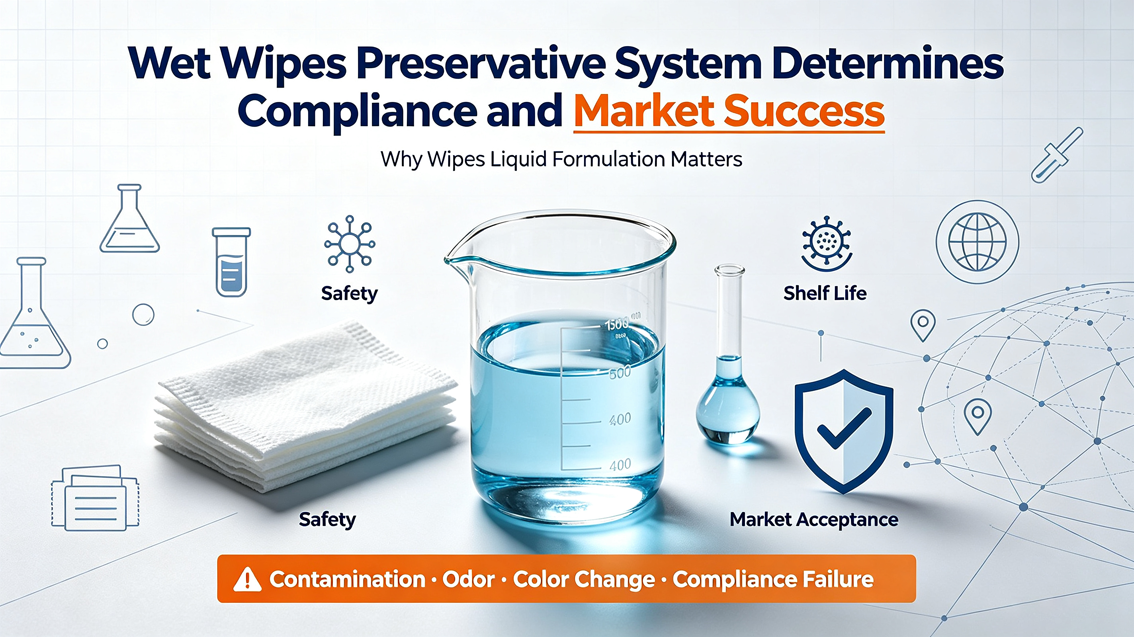
The Hidden Technology Behind Successful Wet Wipes Products
In the global wet wipes industry, manufacturers usually focus on raw materials, nonwoven fabrics, packaging design, and production efficiency. However, one of the most critical factors that determines product safety, shelf life, and market acceptance is often hidden inside the formula:
The preservative system of wet wipes liquid formulation.
A wet wipes product contains a high percentage of water and various functional ingredients, including moisturizers, botanical extracts, skin-conditioning agents, and active ingredients. Without a properly designed preservative system, the wipes liquid can easily become a suitable environment for microbial growth.
An unstable preservative system may lead to:
Microbial contamination
Unpleasant odor or color changes
Reduced shelf life
Failed microbial testing
Regulatory compliance issues
Customer complaints and brand damage
For wet wipes manufacturers, the preservative system is not only a formulation technology issue — it is directly related to product compliance, market access, and brand reputation.
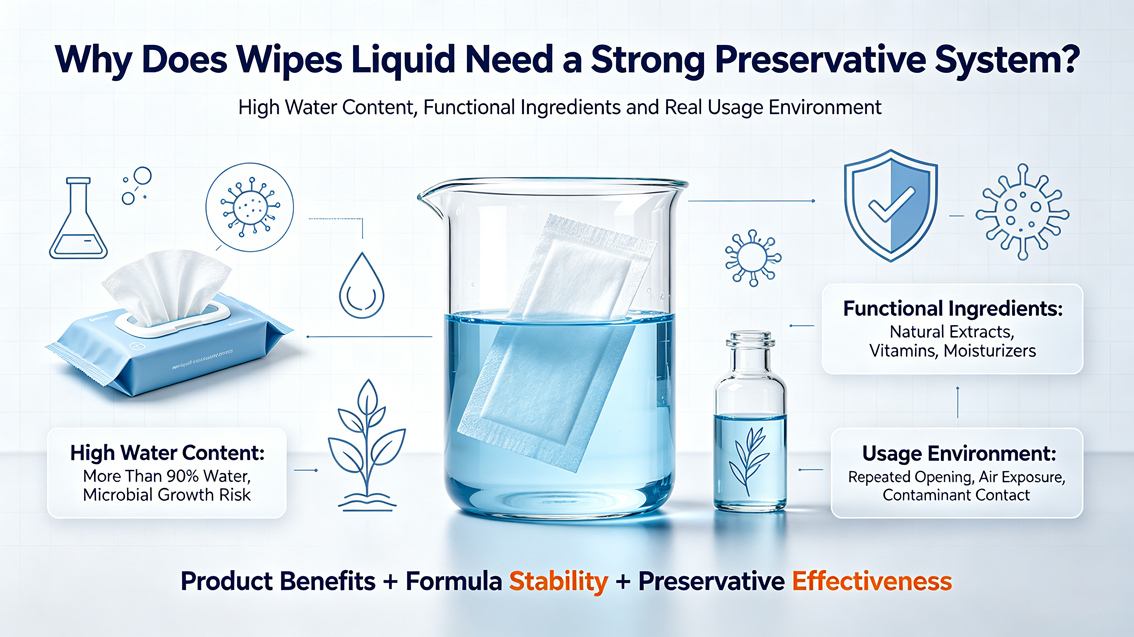
1. Why Does Wipes Liquid Need a Strong Preservative System?
Unlike many traditional cosmetic products, wet wipes have unique formulation challenges.
High Water Content
Most wet wipes liquid solutions contain more than 90% water.
Water provides the necessary environment for microbial growth. Therefore, every wet wipes liquid formulation requires an effective preservation strategy to maintain product safety throughout its shelf life.
Functional Ingredients Increase Preservation Challenges
Modern wet wipes products often contain:
Aloe Vera Extract
Chamomile Extract
Natural Botanical Ingredients
Vitamins
Moisturizing Agents
Skin Conditioning Ingredients
These ingredients improve product performance and consumer experience, but some natural ingredients may also increase the difficulty of microbial control.
Therefore, a professional wet wipes formulation supplier needs to balance:
Product benefits + Formula stability + Preservative effectiveness
Real Consumer Usage Environment
During daily use, wet wipes products may experience:
Repeated opening and closing of packaging
Exposure to air
Contact with skin and external contaminants
A well-designed preservative system helps protect the wipes liquid throughout the entire product lifecycle.
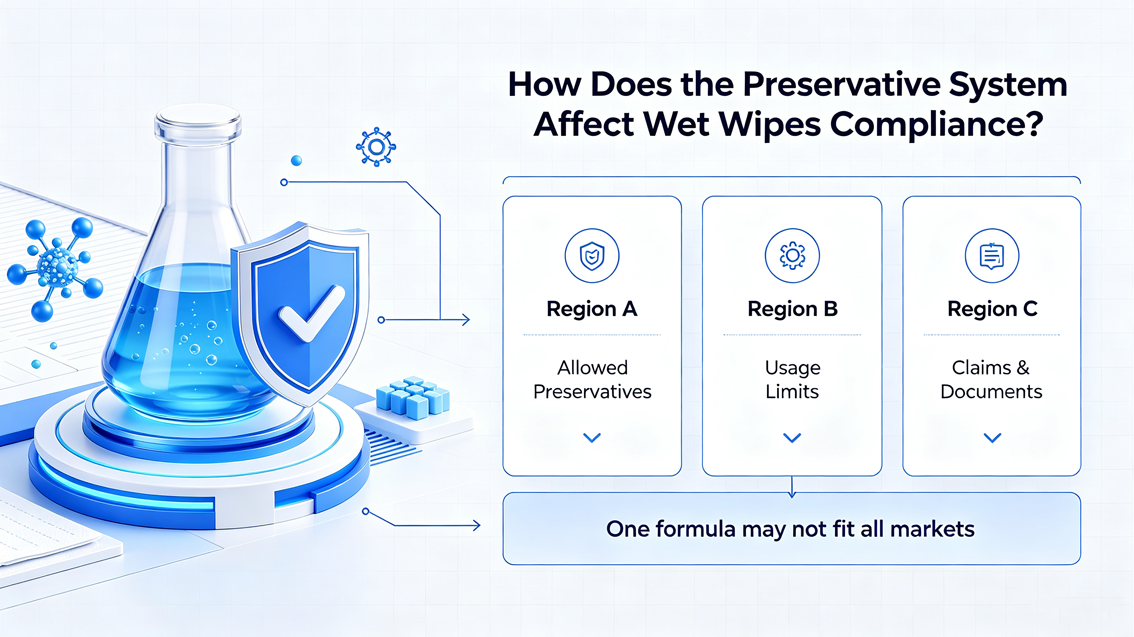
2. How Does the Preservative System Affect Wet Wipes Compliance?
For global wet wipes manufacturers, a formula that works in one country may not be suitable for another market.
Different regions have different requirements regarding:
Allowed preservatives
Maximum usage levels
Product claims
Safety documentation
Therefore, international wet wipes liquid manufacturers need to develop formulas based on the target market.
European Market: Safety and Regulatory Compliance Are Critical
The European market has strict requirements for personal care products.
Wet wipes manufacturers need to consider:
Preservative approval status
Ingredient restrictions
Safety assessment requirements
Product documentation
European customers usually pay close attention to:
Preservative compliance
Cosmetic regulations
Microbial challenge testing
United States Market: Product Category Determines Requirements
The requirements for wet wipes in the United States depend heavily on product positioning.
Examples include:
Baby wipes
Facial cleansing wipes
Personal care wipes
Antibacterial wipes
Disinfecting wipes
Different claims require different formulation strategies.
A professional wipes liquid supplier must understand the difference between:
Cosmetic wipes liquid formulation and Antimicrobial/disinfecting wipes formulation.
Asian, Middle East and Latin American Markets
Many manufacturers in these regions focus on:
Long shelf life
High-temperature transportation
Product stability
Cost efficiency
The ideal preservative system should provide:
Safety
Stability
Regulatory compliance
Competitive cost
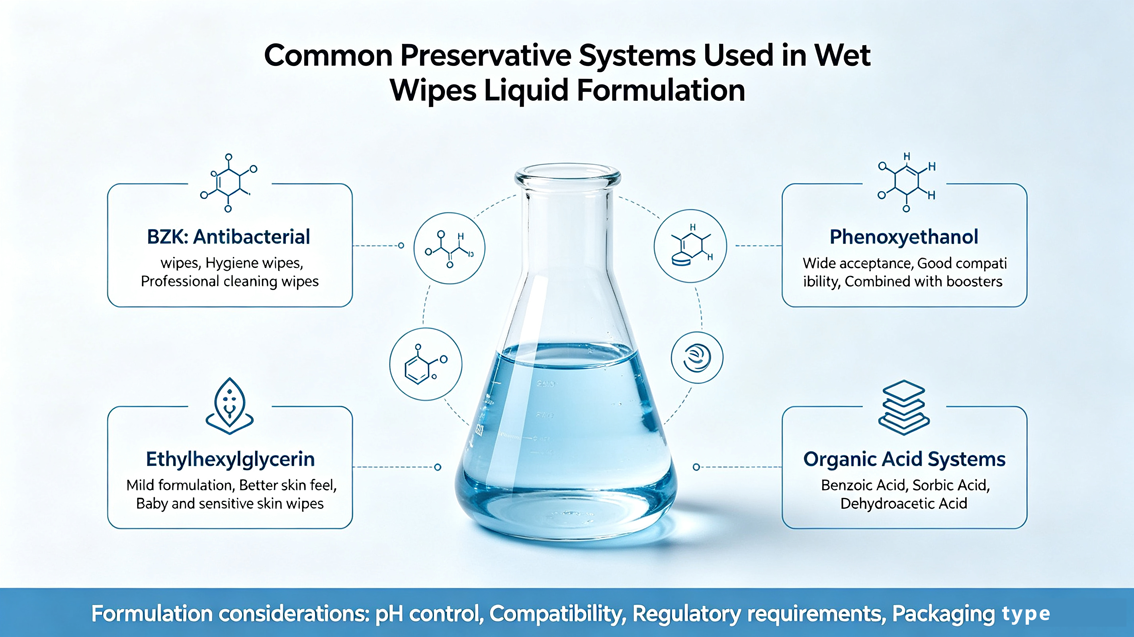
3. Common Preservative Systems Used in Wet Wipes Liquid Formulation
There is no single preservative that works for every wet wipes product.
Professional wet wipes formulation suppliers usually develop customized preservative systems according to:
Product category
Target market
pH value
Packaging type
Ingredient compatibility
Benzalkonium Chloride (BZK) in Wet Wipes Liquid
Benzalkonium Chloride is a widely used antimicrobial ingredient in functional wet wipes.
Key advantages:
Effective antibacterial performance
Suitable for antibacterial wipes applications
Good formulation stability
BZK is commonly used in:
Antibacterial wipes
Hygiene wipes
Professional cleaning wipes
However, formula compatibility and regulatory requirements must always be considered before application.
Phenoxyethanol for Wet Wipes Formulation
Phenoxyethanol is one of the most commonly used preservatives in personal care products.
Advantages:
Wide global acceptance
Good compatibility with different ingredients
Suitable for various wipes liquid formulations
It is often combined with preservative boosters to improve overall protection.
Ethylhexylglycerin as a Preservative Booster
Ethylhexylglycerin is commonly used to enhance preservative performance.
Benefits include:
Improving preservation efficiency
Supporting mild formulations
Enhancing skin feel
It is widely used in gentle wet wipes products, including baby wipes and sensitive skin wipes.
Organic Acid Preservative Systems
Examples include:
Benzoic Acid
Sorbic Acid
Dehydroacetic Acid
Advantages:
Suitable for natural concept products
Supports clean-label formulation trends
Challenges:
Requires careful pH control
More complex formulation design
4. Why Low-Cost Preservative Systems May Create Higher Risks?
Many wet wipes factories focus mainly on:
"How much does the wipes liquid cost per kilogram?"
However, reducing preservative costs too aggressively may create bigger problems.
Risk 1: Microbial Testing Failure
Wet wipes products often require:
Microbial Limit Testing
Preservative Challenge Testing
An unsuitable preservative system may cause product failure during quality evaluation.
Risk 2: Export Market Barriers
International customers may request:
Ingredient lists
Safety documents
Regulatory statements
Technical data
A non-compliant formula can delay product launch and increase development costs.
Risk 3: Brand Reputation Damage
Consumers cannot see the formula.
They only experience:
Bad smell
Product deterioration
Skin discomfort
Poor product performance
The final impact is customer trust.
5. How to Develop an Effective Wet Wipes Liquid Preservative System?
A professional wipes liquid formulation should consider several key factors.
① Product Application
Different wipes require different preservation strategies.
| Product Type | Preservation Focus |
| Baby wipes | Mildness and safety |
| Facial wipes | Low irritation and skin comfort |
| Antibacterial wipes | Antimicrobial performance |
| Pet wipes | Odor control and safety |
| Flushable wipes | Stability and compatibility |
② pH Balance
pH plays an important role in preservative performance.
A successful wipes liquid formulation requires the right balance between:
pH level
Preservative system
Functional ingredients
③ Packaging Design
Different packaging formats create different preservation challenges:
Canister wipes
Refill packs
Single-use sachets
The preservation strategy should match the product usage environment.
④ Target Market Regulations
Before developing a wipes liquid formula, manufacturers should confirm:
Target country
Product category
Product claims
Regulatory requirements
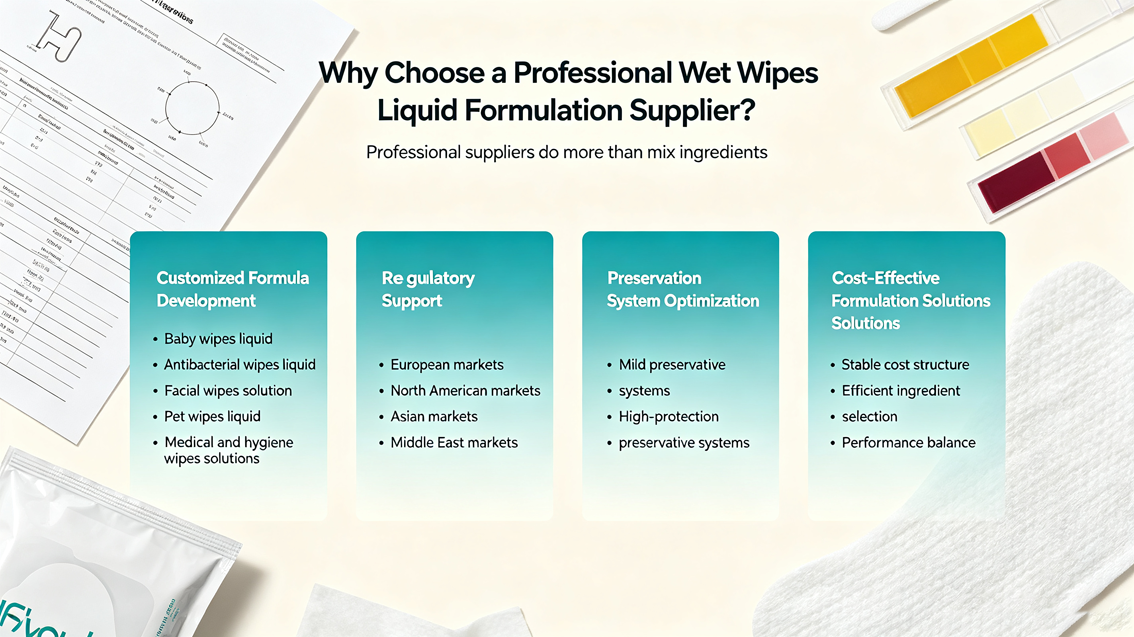
6. Why Choose a Professional Wet Wipes Liquid Formulation Supplier?
A professional wipes liquid manufacturer does more than simply mix ingredients.
A reliable supplier can provide:
Customized Formula Development
Including:
Baby wipes liquid formulation
Antibacterial wipes liquid formulation
Facial wipes solution
Pet wipes liquid
Medical and hygiene wipes solutions
Regulatory Support
Helping manufacturers develop formulas suitable for:
European markets
North American markets
Asian markets
Middle East markets
Preservation System Optimization
Providing:
Mild preservative systems
High-protection preservative systems
Cost-effective formulation solutions
7. Future Trend: Safer, Mild and More Compliant Wipes Liquid Solutions
The global wet wipes market is moving toward:
Safer ingredients
Mild formulations
Transparent labeling
Sustainable solutions
The future of wet wipes preservation is not simply about stronger antimicrobial effects.
It is about achieving the right balance between:
Safety + Performance + Compliance + Cost Efficiency
Conclusion: Preservative System Protects More Than Formula
For global wet wipes manufacturers, the preservative system is one of the most important parts of wipes liquid formulation.
A well-designed preservative system helps ensure:
Product safety
Regulatory compliance
Long shelf life
Market acceptance
Brand protection
Choosing the right wet wipes liquid formulation partner allows manufacturers to reduce development risks, accelerate product launches, and compete successfully in global markets.
The right preservative system does not only protect the wipes liquid — it protects your product quality, brand value, and global business opportunities.
