





 English
 USA
USA
 西班牙语
西班牙语
 俄罗斯
俄罗斯
 葡萄牙
葡萄牙
 印尼
印尼
 巴基斯坦
巴基斯坦
 尼日利亚
尼日利亚
 孟加拉
孟加拉
 墨西哥
墨西哥
 越南
越南
 日本
日本
 韩国
韩国
 沙特阿拉伯
沙特阿拉伯

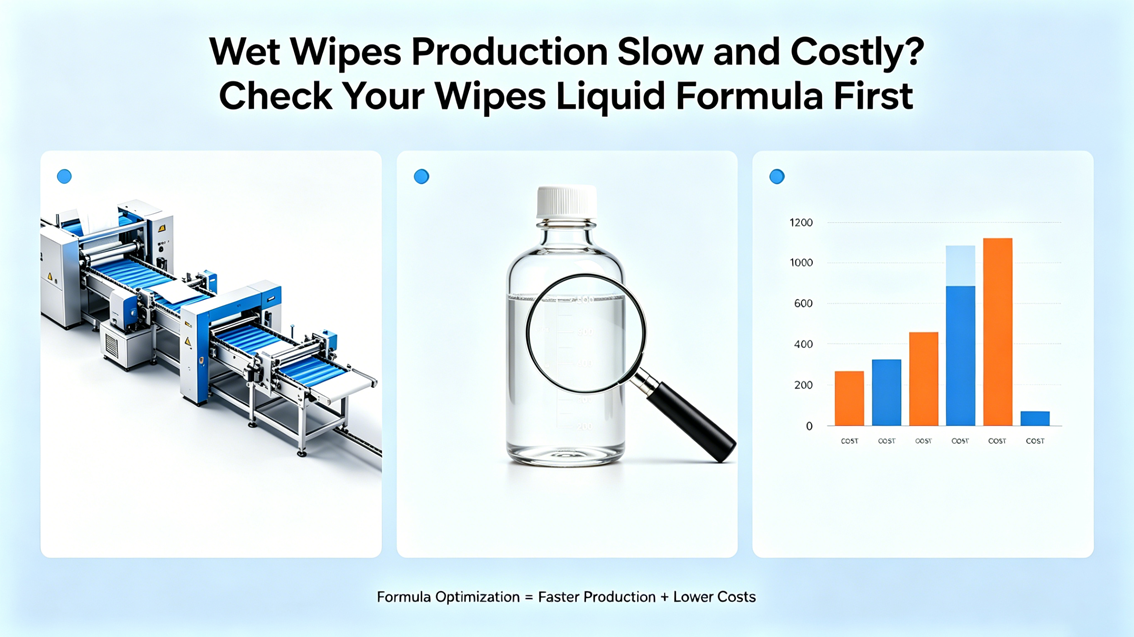
Many wet wipes factory owners and technicians face the same challenge: slow production, high costs, and inconsistent product quality.
The first thought is often that the problem comes from equipment or labor, but in reality, the real culprit is often the wet wipes wipes liquid formula.
Why wipes liquid formula Affects Production Efficiency
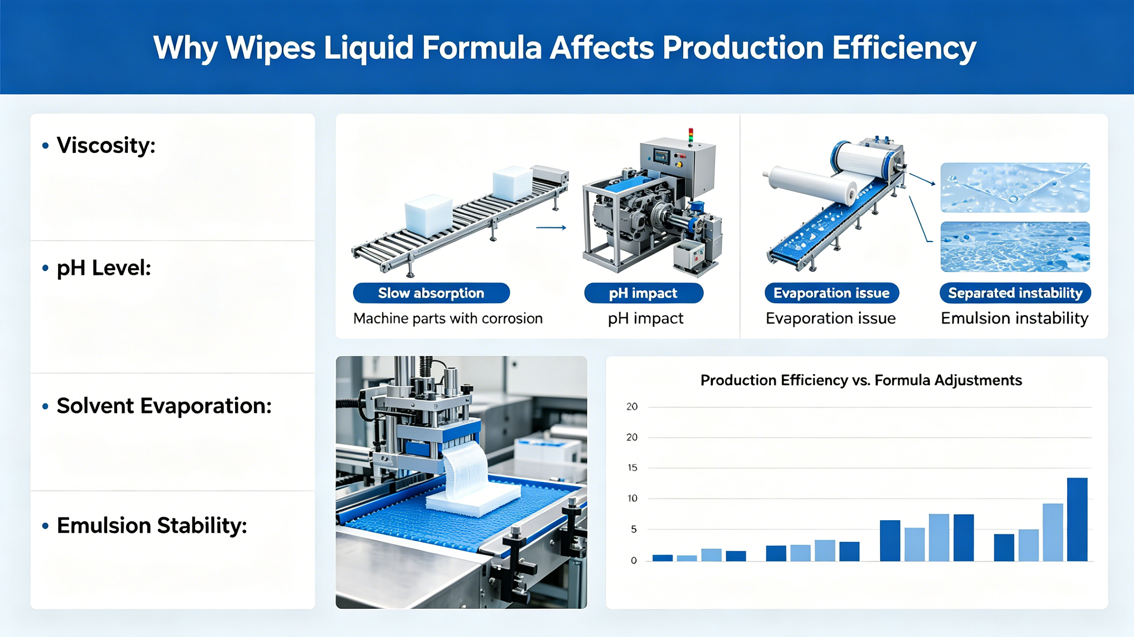
The wipes liquid formula not only determines the feel of the wipes but also directly affects how smoothly the factory operates:
1. Viscosity and Flow
Too thick or unstable formulas can cause uneven liquid absorption or even clog machines.
Result: slower production, frequent machine stops.
2. Foaming and Friction
Improper surfactant use can cause fabric entanglement or slipping.
Result: increased operational difficulty, limited output.
3. Stability Issues
An unstable formula may separate or settle during storage or filling.
Result: higher rework rate, increased labor and material costs.
Key takeaway: The wipes liquid formula directly determines machine speed, uptime, and product consistency.
How wipes liquid formula Impacts Production Costs
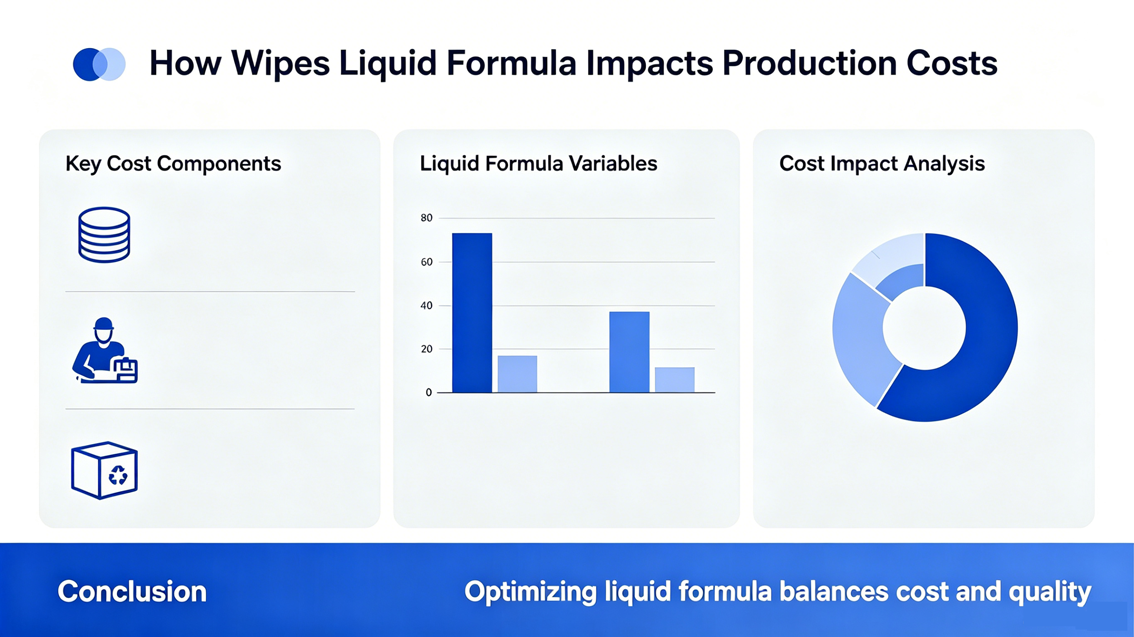
Beyond output, the wipes liquid formula also affects cost:
Raw Material Cost
Inefficient formulas may require large amounts of surfactants or thickeners to achieve desired softness or cleaning power, raising material costs.
Rework and Waste
Separation, settling, or uneven absorption can increase rework rates, wasting fabric, liquid, and labor.
Equipment Maintenance Cost
High viscosity or foamy liquids require more frequent cleaning and maintenance, indirectly increasing costs.
Key takeaway: Optimizing your wipes liquid formula can boost production speed and significantly reduce material waste and maintenance costs.
Common Formula Issues and Factory Symptoms
| Formula Issue | Factory Symptom | Solution |
| High viscosity | Slow absorption, frequent machine stops | Adjust water/thickener ratio or use lower-viscosity alternatives |
| Uneven surfactant | Uneven absorption, fabric entanglement | Optimize mixing process; add surfactants in stages |
| Preservative or additive settling | Product separation, high rework rate | Use more stable additives or adjust pH |
| Excessive foaming | Frequent machine stops, uneven fabric | Control foaming agents and add defoamer |
How to Optimize wipes liquid formulas for Efficiency and Cost
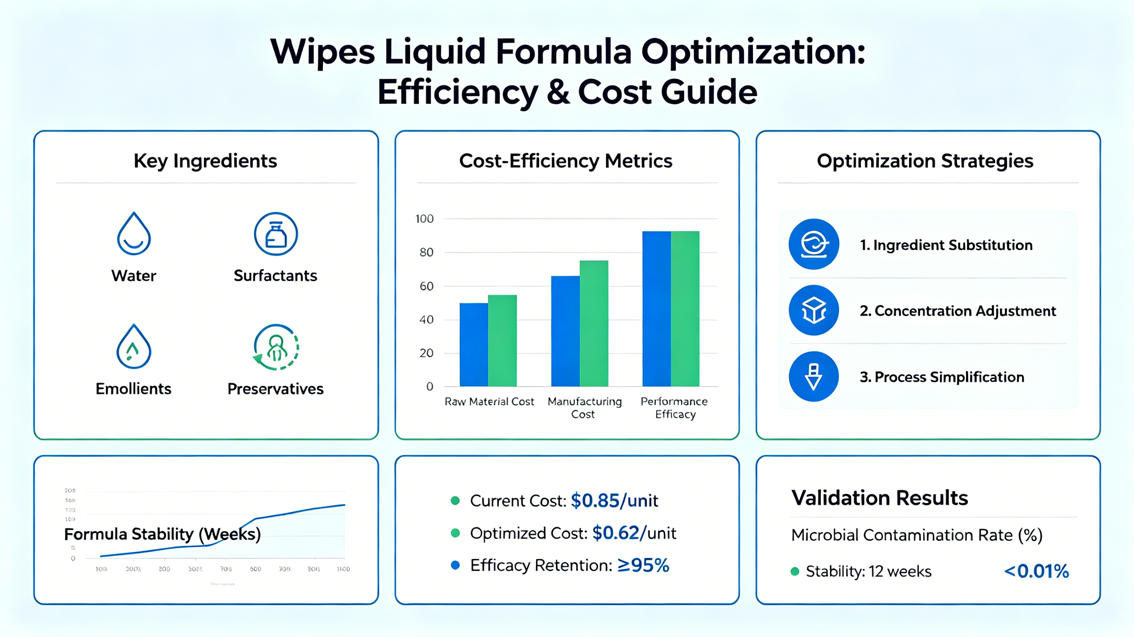
1. Choose the Right Surfactants
Low-foaming, gentle surfactants reduce machine downtime.
Optimize dosage to ensure cleaning performance while lowering costs.
2. Control Viscosity and Flow
Adjust water and thickener ratio for smooth absorption and filling.
Use temperature and pH adjustments to improve stability.
3. Improve Formula Stability
Balance preservatives and anti-settling agents to prevent separation.
Use high-quality raw materials to reduce rework and waste.
4. Align with Production Line
Design formulas considering equipment parameters to match absorption speed and volume.
Regularly monitor formula performance on the line and adjust as needed.
Summary
Many wet wipes factories focus on equipment or labor to improve efficiency and reduce costs, but often overlook the importance of the wipes liquid formula.
Core insight:
The wipes liquid formula directly impacts liquid absorption, machine performance, and production stability. Optimizing the formula is one of the most effective ways to increase output and reduce costs.
By using stable raw materials, controlling viscosity, and optimizing surfactants and preservatives, your factory can run faster and significantly cut rework, waste, and maintenance costs.
For factories aiming to stay competitive, starting with the formula is the real path to cost-effective, high-efficiency production.
Take Action Now
If you want to:
Increase wet wipes production capacity
Reduce liquid waste and rework
Optimize your formula for better product stability
We offer professional wipes liquid formula optimization services, designing high-performance formulas tailored for your production line.
